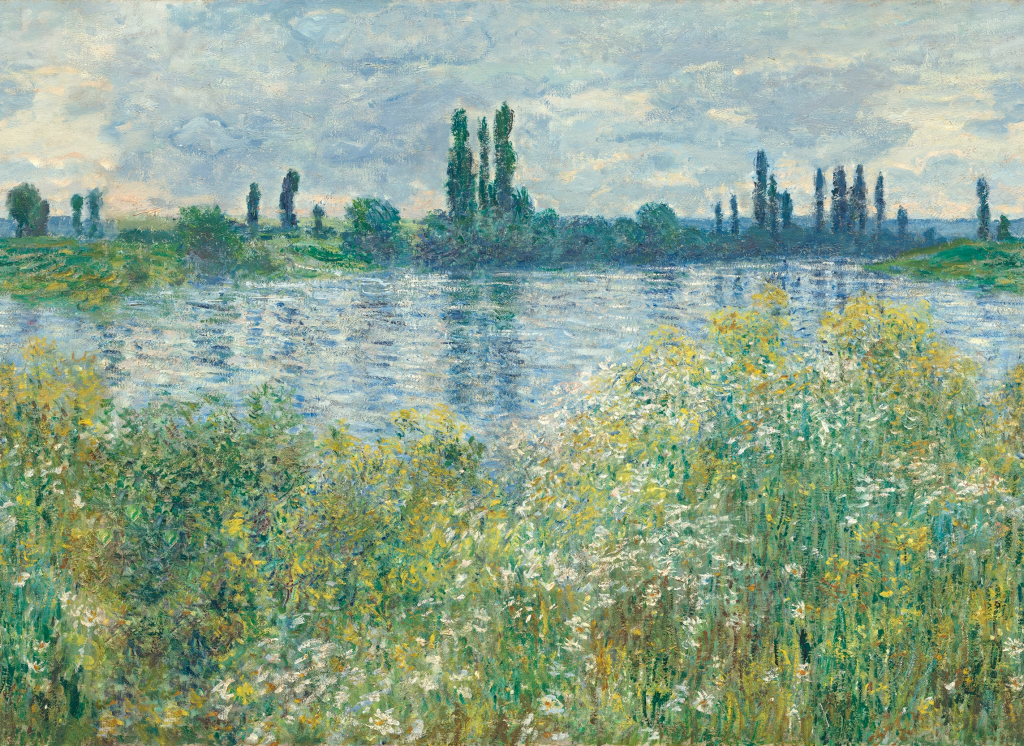
I’m not much of an art guy, but Impressionism is my favorite art movement. I think I inherited this opinion from my mother (hi Mom!). Each painting feels like an emotional moment captured in amber. The Impressionists were concerned with painting quickly, on the spot, and capturing the fleeting play of light. To me, it feels like the painting equivalent of jazz improv.
Impressionism arose in the wake of the invention of photography, and this is where the history of Impressionism rhymes with the modern story of art. Generative artificial intelligence makes it very easy to create music, writing, and pictures. You can get an AI to convert a photograph into an Impressionistic painting. It’s a huge upheaval, but Impressionism reminds us that the rise of AI is by no means the first technology to upturn the lives of artists.
From The Story of Art:
There was no need for painting to perform a task which a mechanical device could perform better and more cheaply. We must not forget that in the past the art of painting served a number of utilitarian ends. It was used to record the likeness of a notable person or the view of a country house. The painter was a man who could defeat the transitory nature of things and preserve the aspect of any object for posterity.
Continue the story. Impressionist painters received derision from the public and from conventional art critique of the time. They said it looked sloppy, and the subject matter was undignified. In a way, I think the Impressionists were the truest artists of the time: they defeated the transitory nature of things, but it was the subjective experience they captured instead of the objective. It was something that even photographs couldn’t capture perfectly.
Undeterred by the critics, they got together and showed their pieces in, of all places, a photographer’s studio, and the public started to get it. Their eventual success became an inspiration to innovators ever since. It’s where artists got the stereotypical posture of “haters gonna hate, they don’t understand my genius.”
The struggle of the Impressionists became the treasured legend of all innovators in art, who would always point to this conspicuous failure of the public to recognize novel methods. In a sense, this notorious failure is as important in the history of art as was the ultimate victory of the Impressionist programme.
That response to the new technology is what I want to discuss today.
I have begun to write a novel. I’m starting with a 500 words a day, and that is already plenty of challenge for me. As I do so, I’m noticing that there are many ideas I come up with that I simply don’t have the skills to execute yet. Ideas can be beautiful, but if they’re not incarnated, then they’re hollow to the reader. Instead of falling in love with one idea and struggling to craft it, I think it’s better to practice the craft with lots of ideas and try to choose more beautiful ideas over time.
I recently stumbled on a subreddit, /r/writingwithAI, where a redditor rather pretentiously referred to himself as a “story architect” and proceeded to defend his use of AI in his writing from nobody in particular. I don’t pass judgment on anyone’s creative expression. In fact, writing with AI seems like a reasonable adaptation to the changing environment. Instead of becoming an Impressionist, this would be like becoming a photographer. No matter how much progress marches on, artistry itself remains. The AI becomes just another tool for expression.
Imagine all those ideas that I struggle to express that an AI could whip up for me. I wouldn’t have to do all this practice. But then again, wouldn’t that reduce the baseline texture of my writing to the lowest common denominator?
I think the main beneficiary of art is the artist. Expressing your creativity is an affirmation of the soul, and it fills something in us that nothing else can. And I don’t mean consuming art or entertainment; you have to make it. It doesn’t have to be good, but it has to be you. And it doesn’t have anything to do with monetary gain.
The modern world has made it cheap and easy to deliver art from artist to audience. It is trivial for the common man to make and distribute books, music, and movies to anyone in the world. He just can’t make much money doing so. And part of me believes that this is the proper fate of art: something that we do for ourselves. Art is corrupted by monetary incentive.
In a world like this, who cares what people use to make art with? Use AI, don’t use AI. You can write your book by hand if that adds to the experience. Art shouldn’t be about money or vanity or legacy. Art is for the artist.
 The Peripatetic
Leave a comment